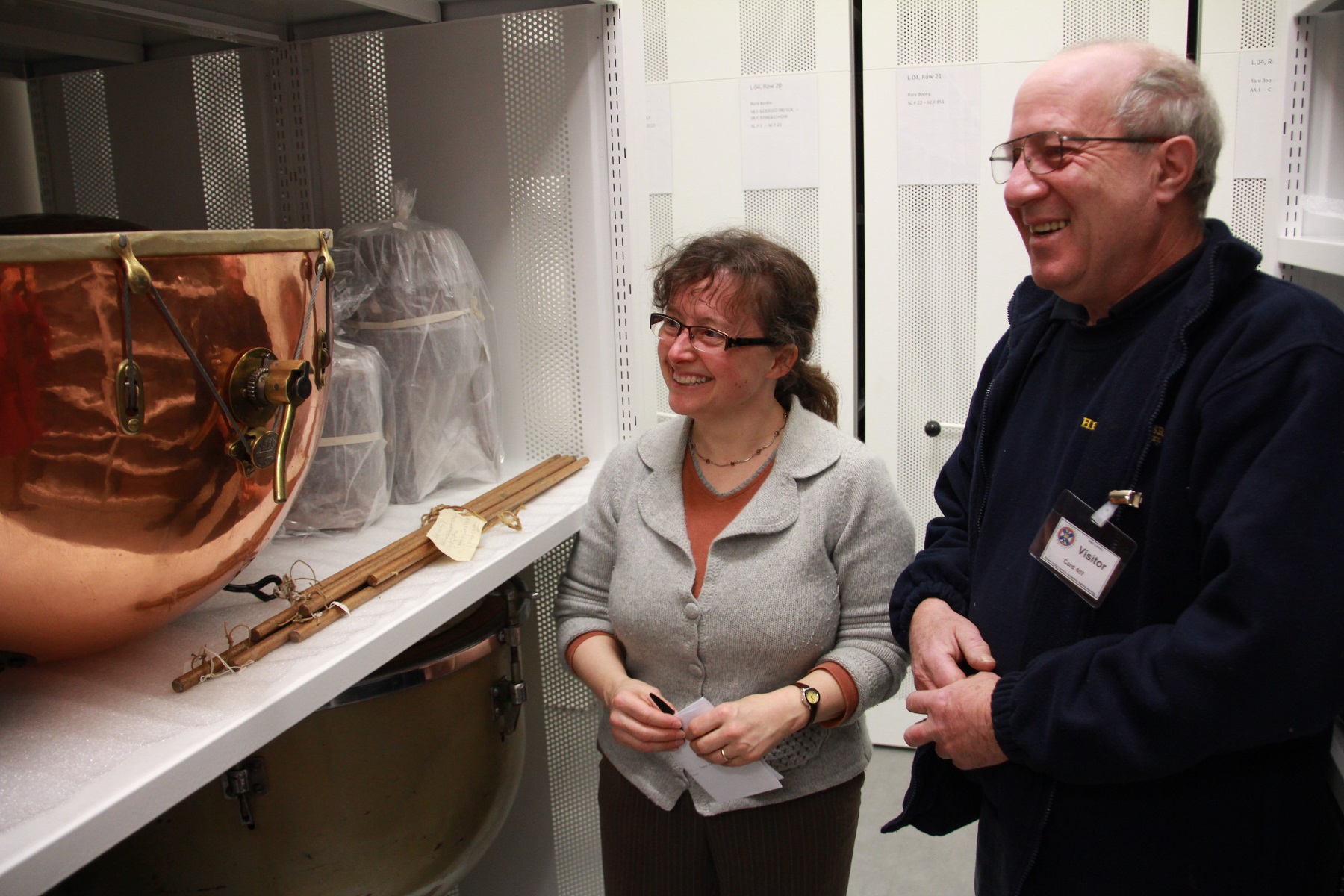


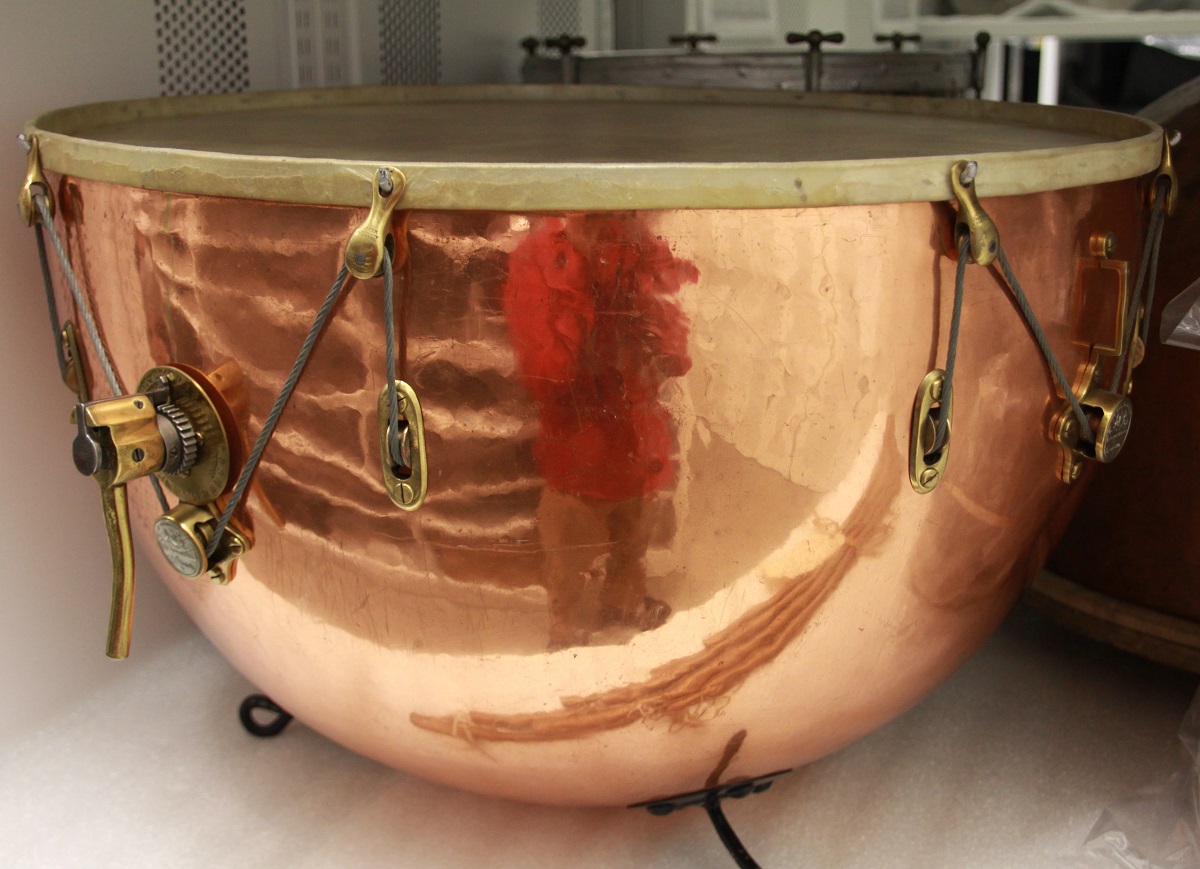
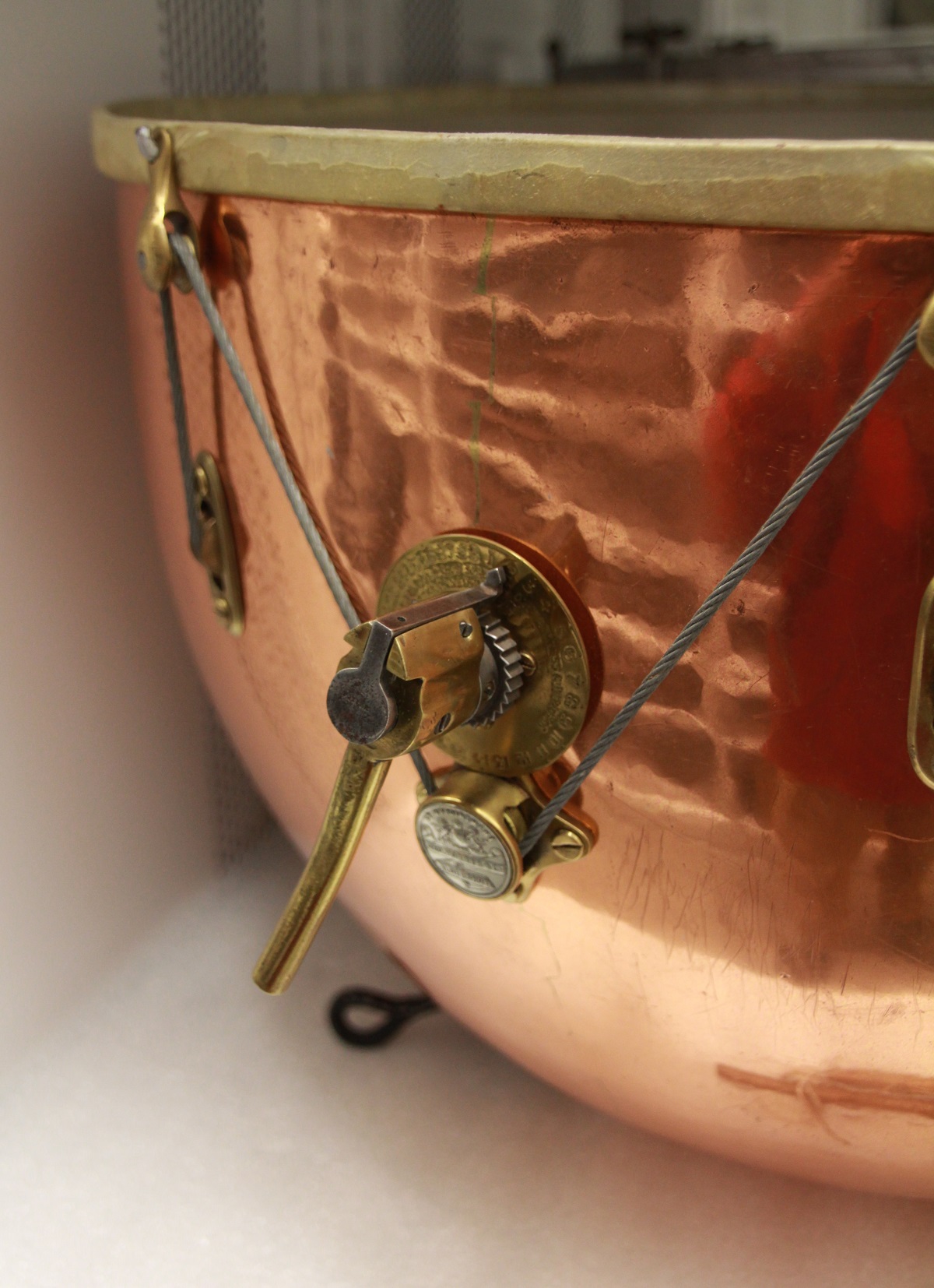
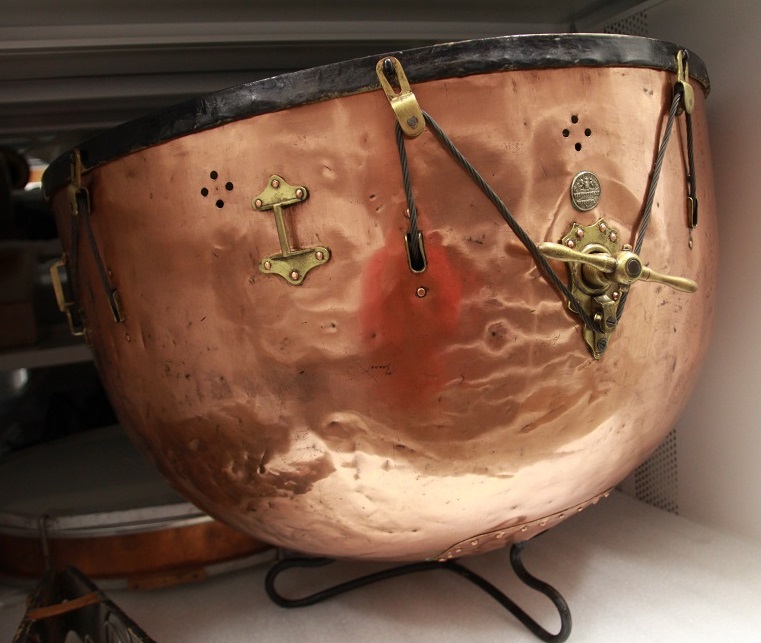
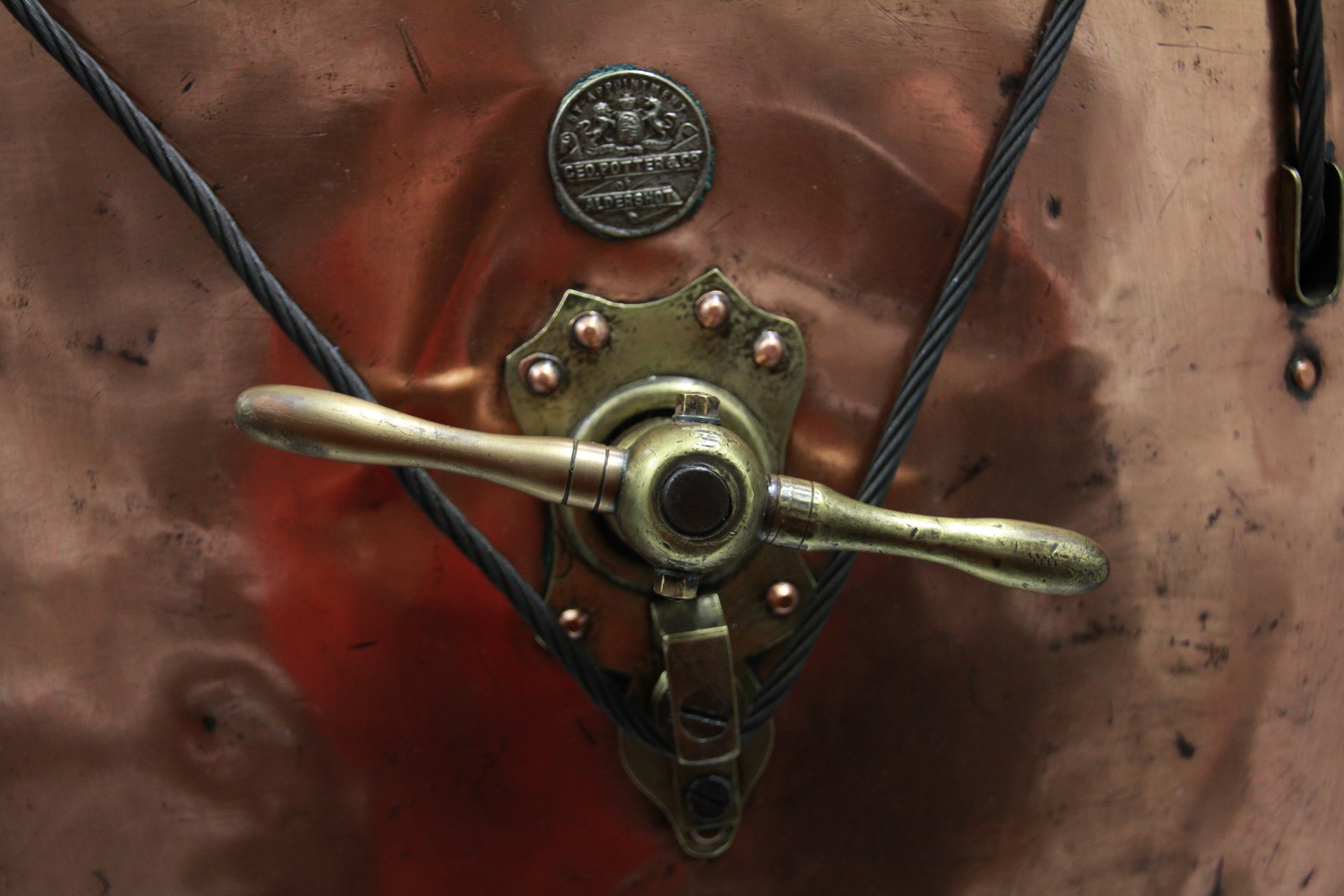
Pete Woods and I visited Edinburgh University Instrument Museum. They have an enormous collection, including some weird and wonderful timpani and percussion instruments, the like of which we had never seen before. We are very grateful to the Curator, Dr Jenny Nex, for showing us around. Both drums below were made by George Potter, we estimate at the end of the 1800s. We suspect that their tuning mechanisms, although beautifully engineered and manufactured, actually weren't that successful due to the difficulty of spreading the tension evenly all the way around the drum. Hence these types of designs fell out of fashion quite quickly.

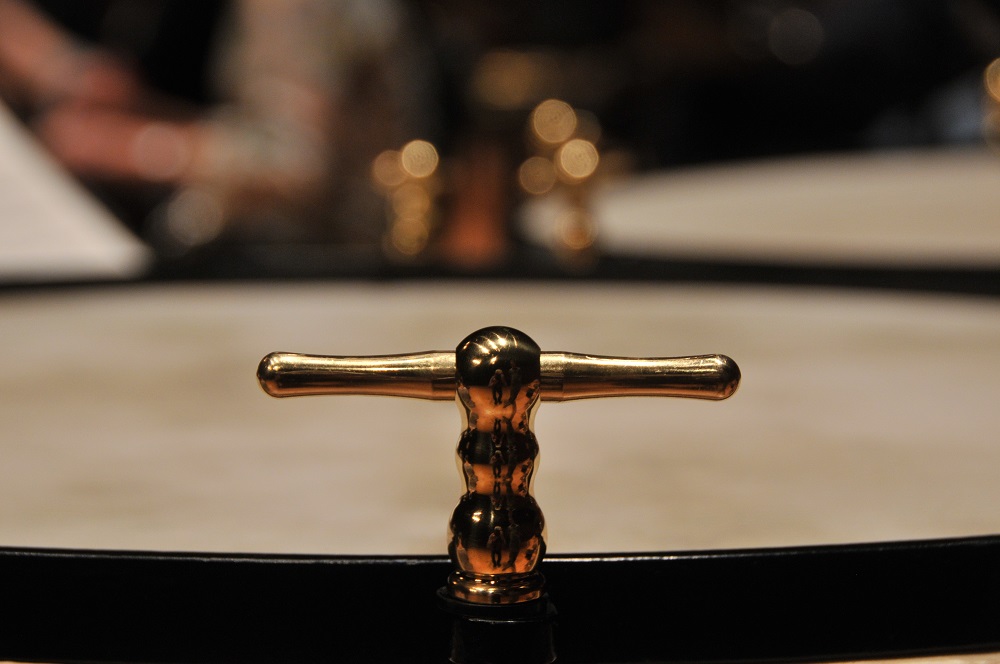
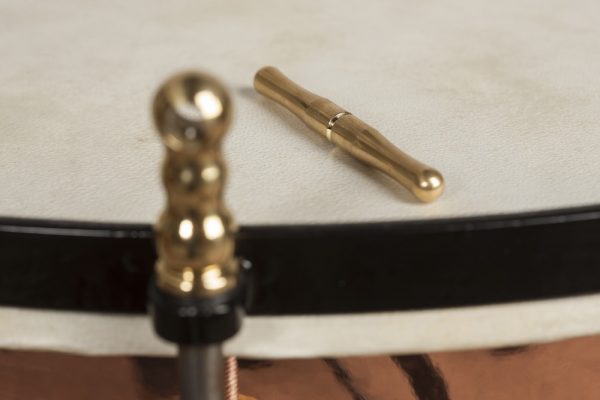
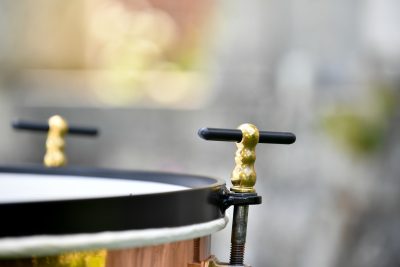
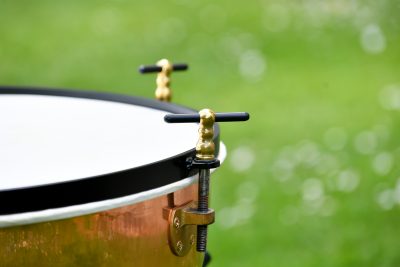
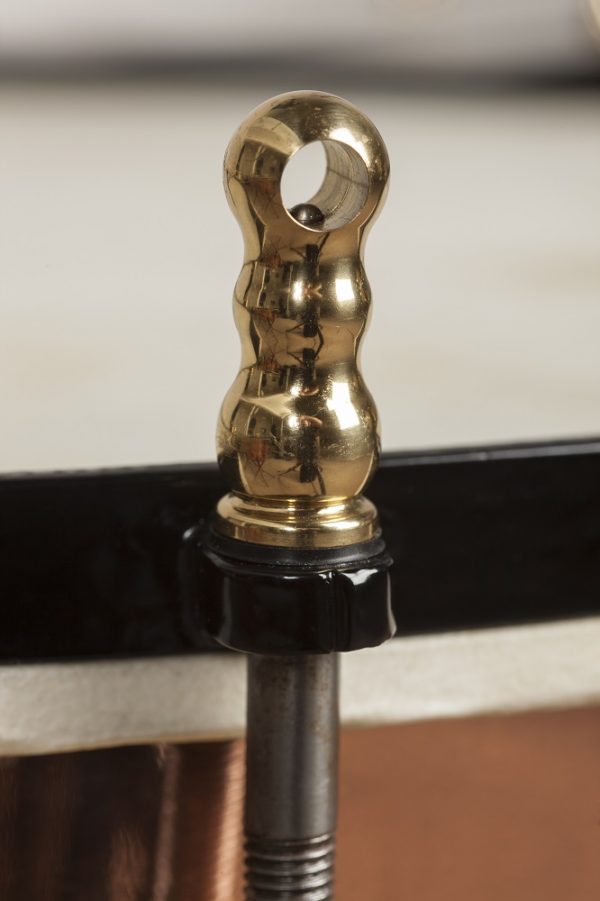
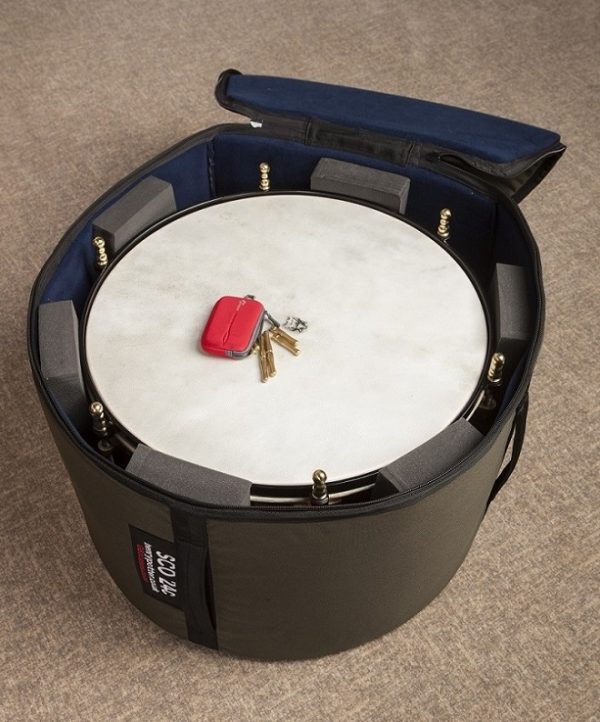
It is a common problem with hand-tuned timpani that after a concert, when a drum is sounding great, you put it away in its case and then, during transport, some of the taps get accidentally turned by unequal amounts. The next day, you take the drum out of its case to find that it doesn't have a true note any more. After many frustrating experiences I wanted to find a way around this. On tour, inevitably drums suffer from big temperature changes, especially when flying, but this is manageable provided that the head stays in tune with itself.
After the concert you leave the drum on a low-ish note and take all the removable taps out. The next day, even if the drum has gone extremely low in pitch, by taking it up an exactly even amount on each tap you know that the tension will be even, and the time it will take for the drum to settle and produce a decent note will be drastically reduced.
Pete Woods (of Henry Potter) and I worked on various designs before coming up with this one and I am very glad to say that it has absolutely transformed my life on tour! Removable taps can be fitted to work with most types of tap/fitting at a cost of £55 per tap.
Here is a video about Gabrieli Consort and Players' Grande Messe des Morts recording in 2010. At 4' 48" I talk about sponge-headed sticks.
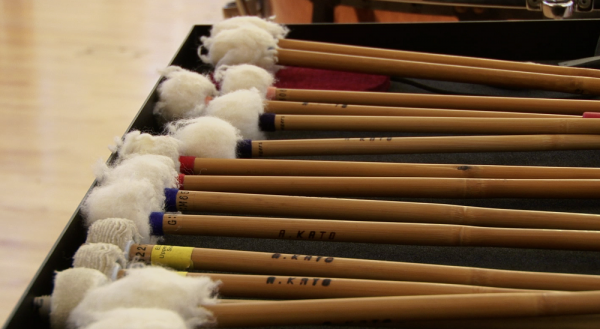
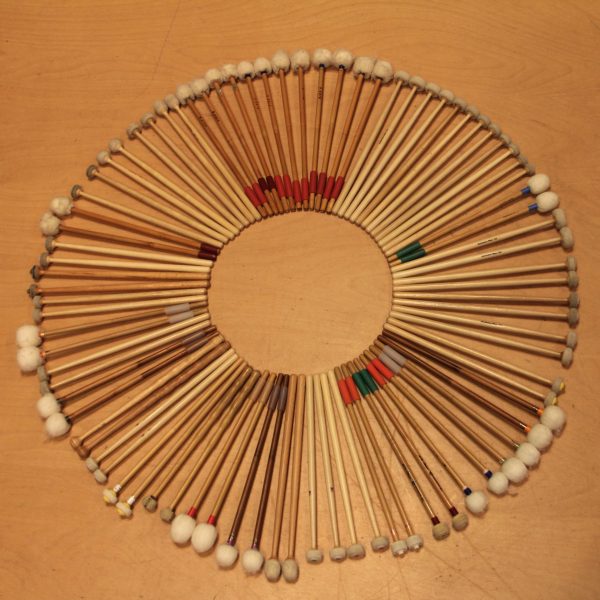
A timpanist's ultimate nerdy question! Although I hate to generalise, here are a couple of pointers; in my experience Viennese flannell work better on goat skins, and Dresdner Flannell work better on calf skins and Renaissance heads. Wooden-shafted sticks are cheaper, up to half the price of cane, and they are excellent on small drums and Schnellars, bringing out a deep sound and a full array of colours. On small drums, sticks with cane shafts can make quite a thin sound in comparison. However, it is hard to choose exactly the right wooden-shafted sticks and, if they are too heavy, they can produce a really thuddy sound quite easily.
Cane shafts work much better on large timpani; Ringers, Dresdens etc. On those drums, with thinner skins, wooden-shafted sticks can sound far too heavy.
Hard felt sticks are excellent too. Many people believe that when playing small timpani for classical repertoire, wooden sticks should always be used, particularly in a "period" performance. However, I am not sure this always needs to be the case. Different sticks obviously provide a wider variety of sounds and also, when playing in a loud Beethoven symphony in a huge hall, with the kind of energy and volume required, wood sticks make little or no difference! And, importantly, at those kind of volumes, felt sticks are a good deal kinder to natural skins....
Here are some excellent makers of sticks for all kinds of timpani.
Kolberg For small timps I recommend HF26, HF30 and DF26 or WF26 depending on heads. For Schnellars WF30 work well. For small and large timpani DFT30 are a good starter choice.
Kaufmann 103 and 105 are two very good contrasting Viennese flannell pairs to start off with and, in their hard felt range, 118 or 119 and 122 are excellent. 122 is very similar to Kolberg HF26.
Fromme an excellent range of sticks clearly explained in a downloadable catalogue.
Kappert superb felt sticks for symphonic timpani.
Kato - see info sheet below, click on it to enlarge. My workhorse ones are Model Seegers C (pair 3) and I find myself using Wagner (15) and Bruckner (19) a lot. In flannell, DFT3624 are excellent for large timpani as are the smaller 3022 models.

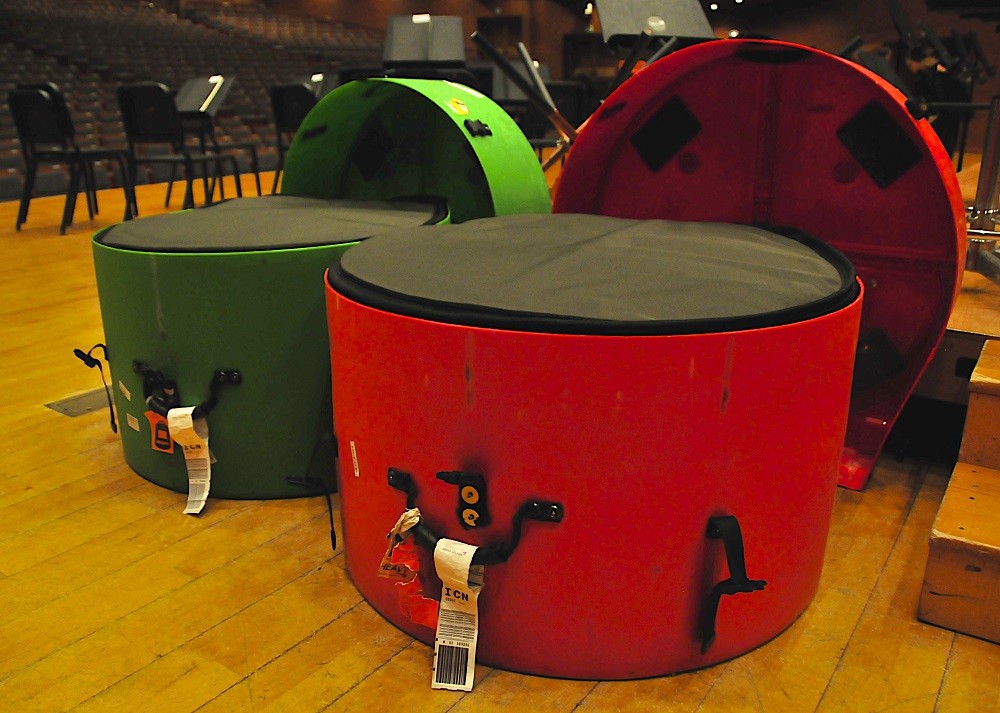
Bags by GBZ:
These are available in the following sizes:
20" bag (ie for 20" Hardcase HN20B) up to 21" timpani
22" bag up to 23" timpani
24" bag up to 25" timpani
26" bag up to 27.5" timpani
The total price of a bag including tailor-made foam is £250 (+VAT). Personalized badges are available at a cost of £20 (+ VAT) each.
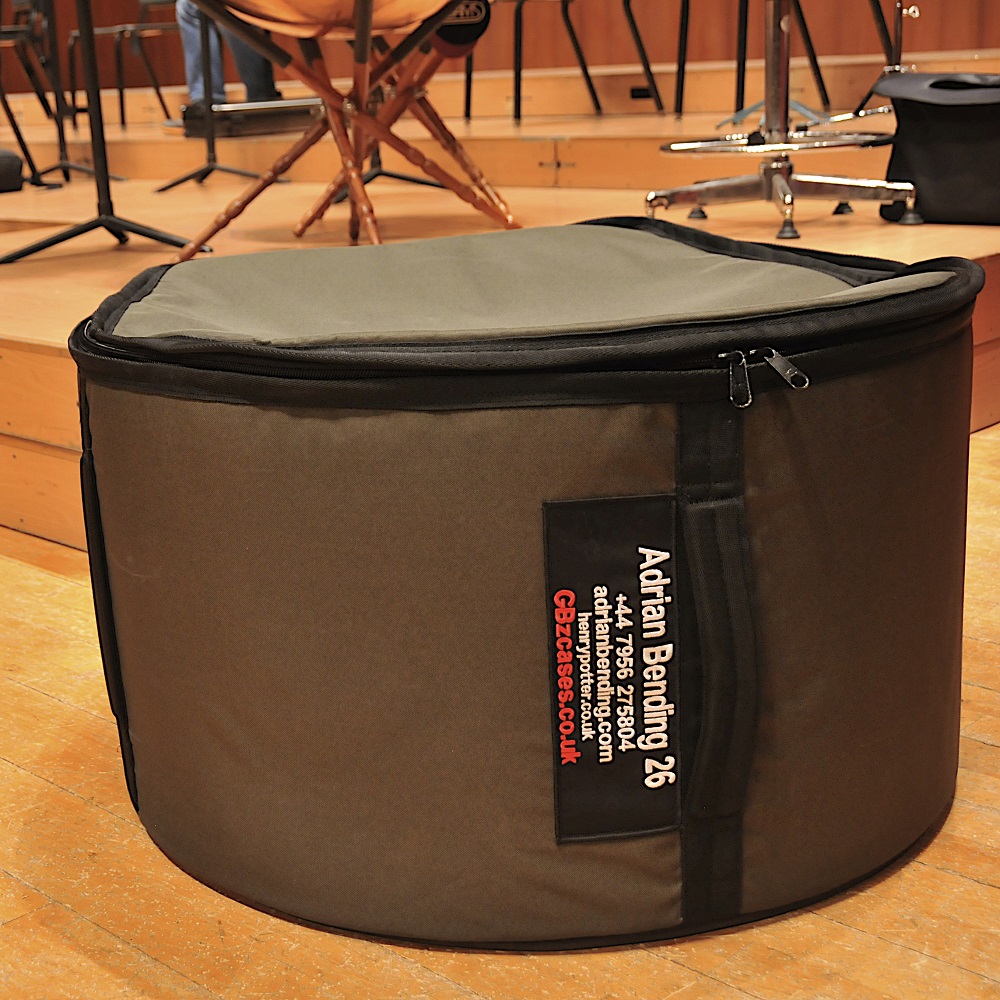
Hardcases:
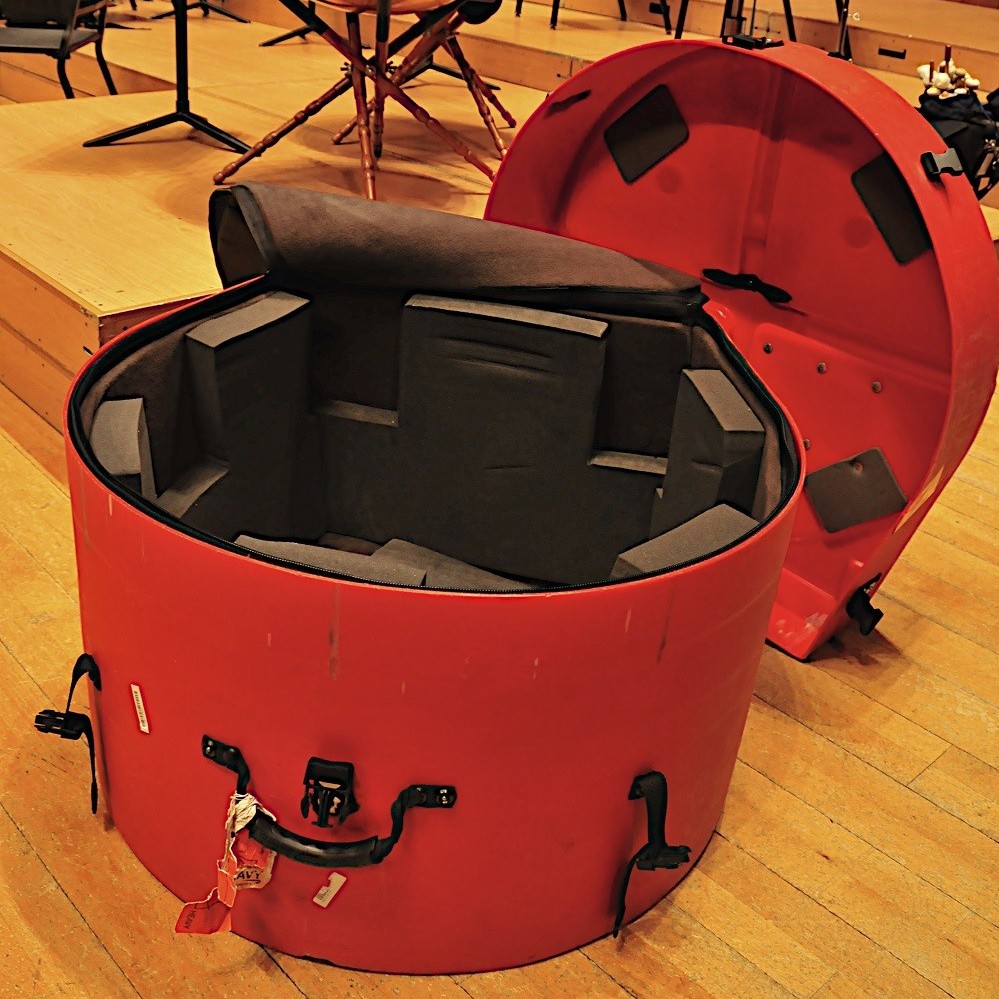
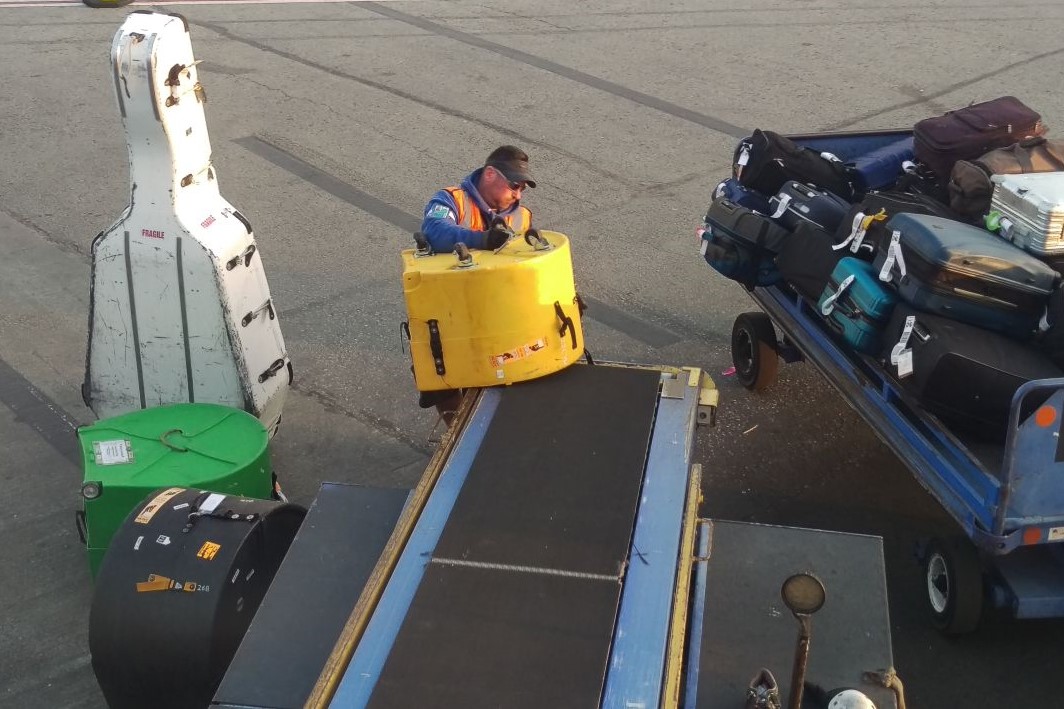
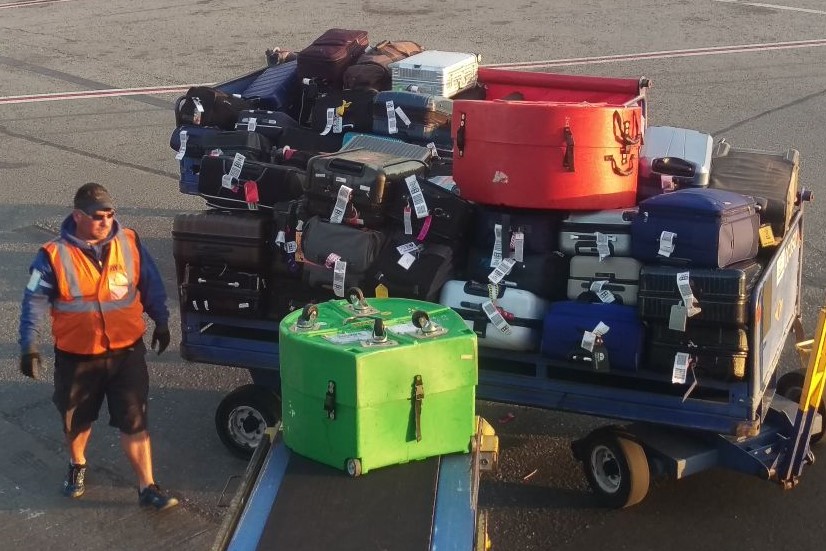
HN26B, here in red, is 95cm x 45cm, weight 31kg, for timpani 25" - 27.5".
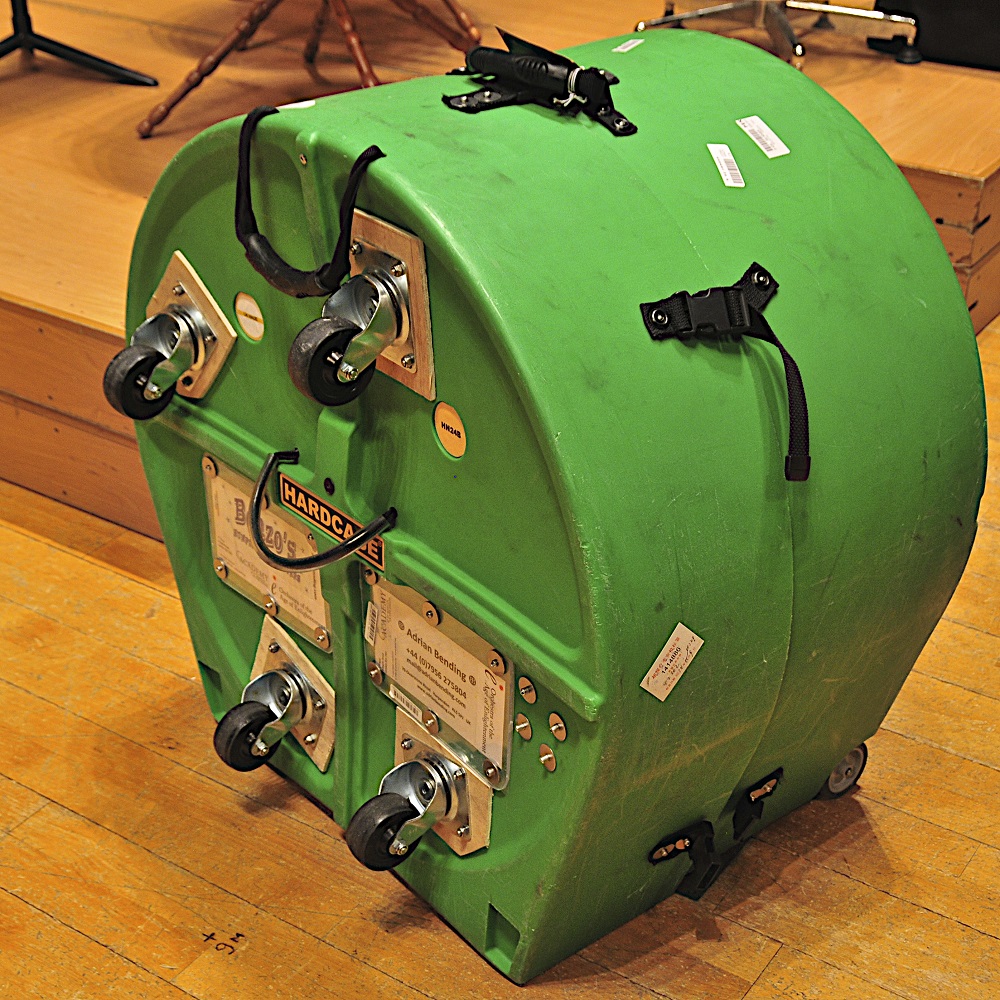
HN24B, here in green, 88cm x 45cm, weight 30kg, for timpani 23" - 25"
HN22B, not shown, is 79cm x 45cm, weight 28kg, for timpani 20"-23"
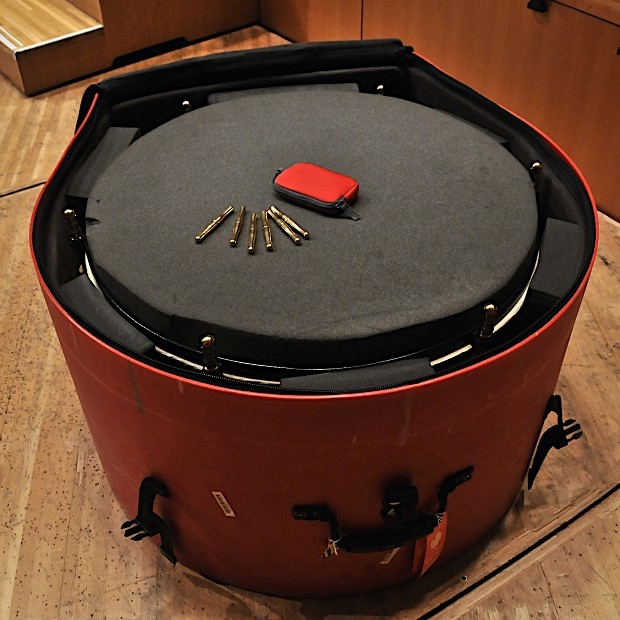
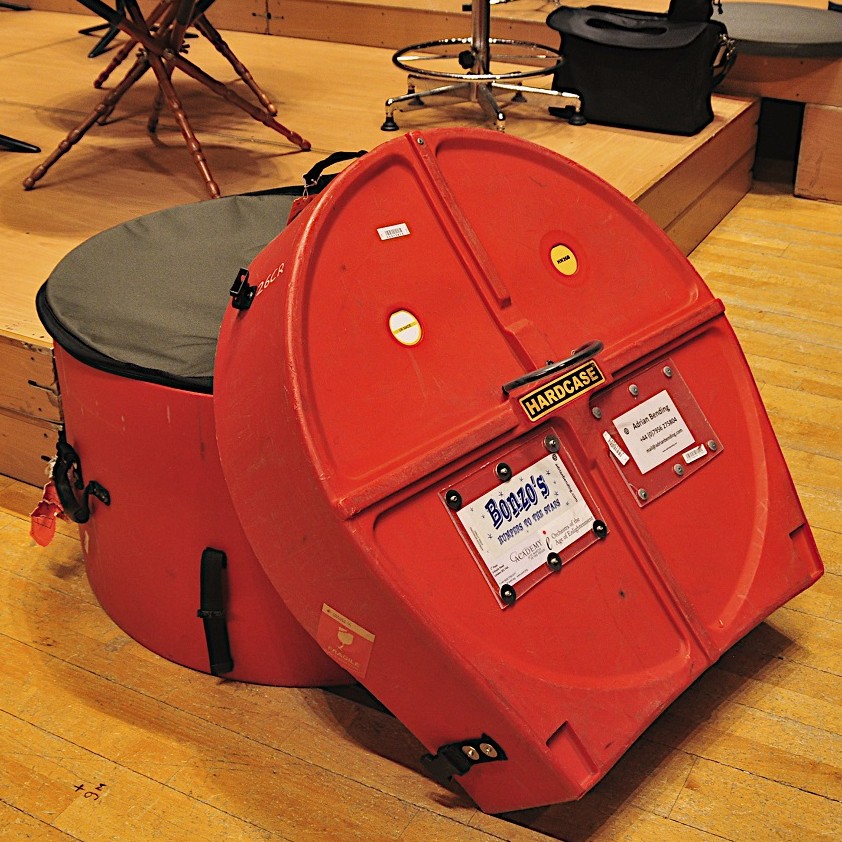

Timpani stands are available to buy for £85 (+VAT) each.
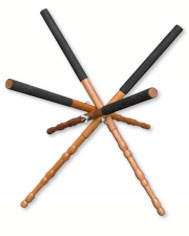
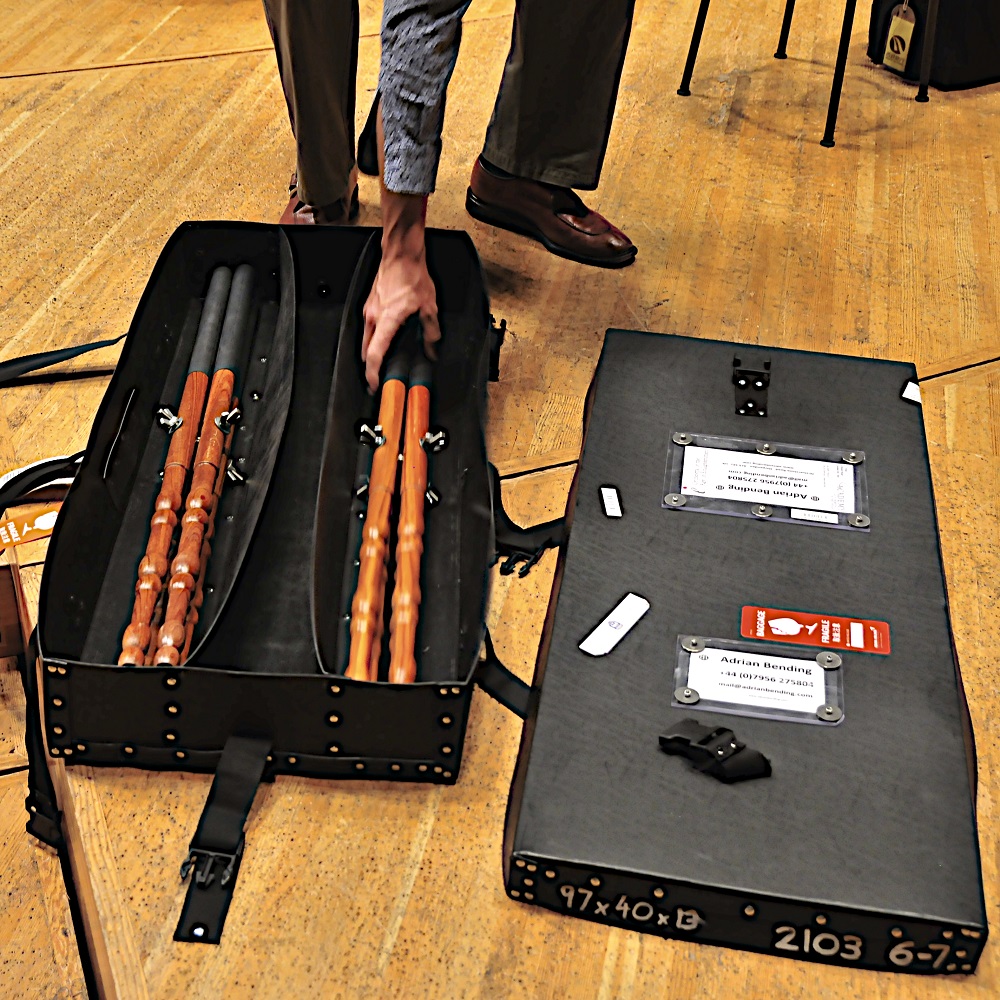
Flight case for timpani stands:

Alternatively, stands can be transported in lightweight Le Blond boxes. This one, for up to three stands, has dimensions of 97cm long x 40 wide x 13 deep and weighs around 15kg. These Le Blond cases are available for 2, 3 or 4 stands, with prices £35-£45 (+VAT).
https://www.youtube.com/watch?v=1BAgaPkaaeY



 *
*


 **
**




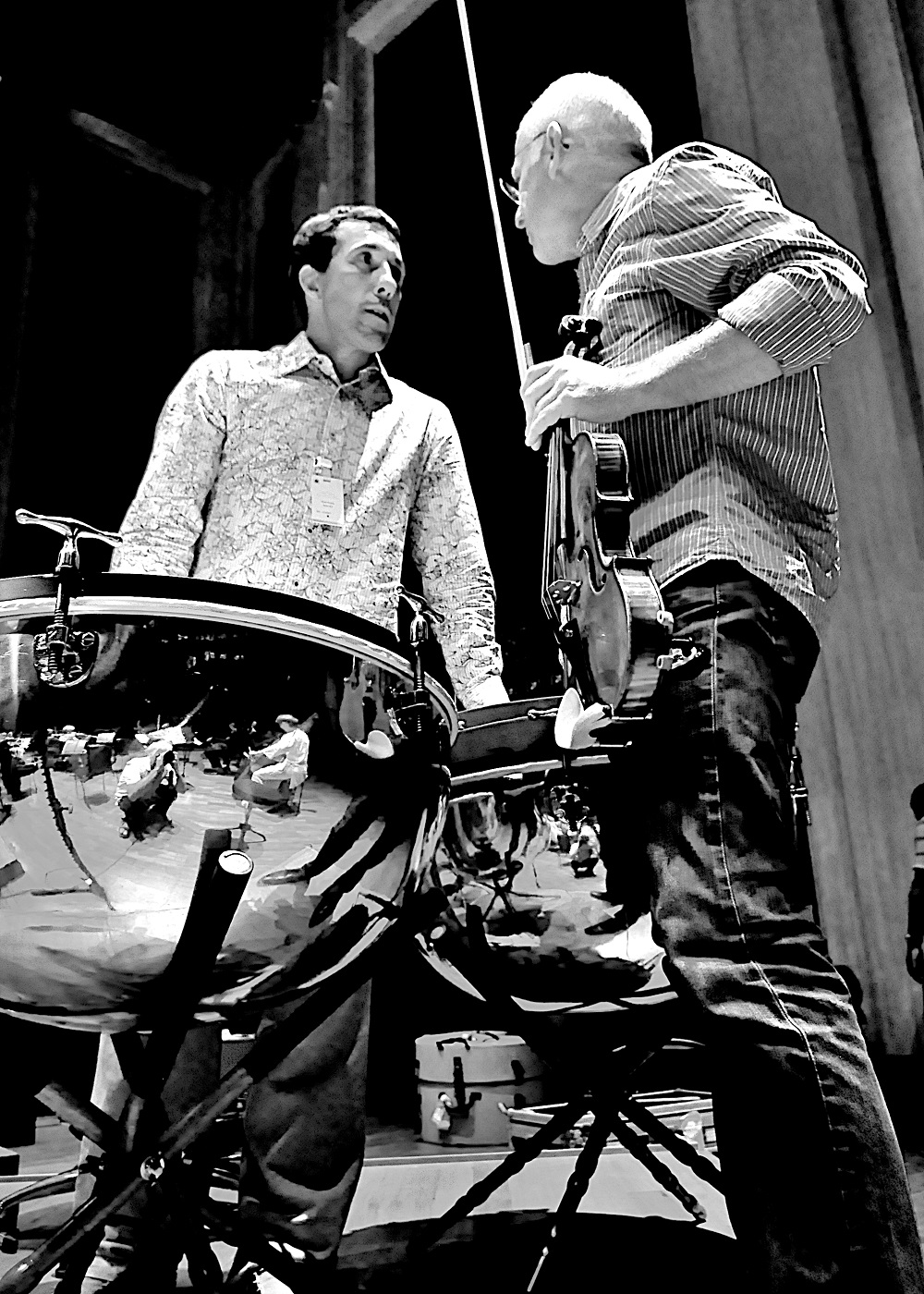

With many thanks to the photographers and film makers who have allowed me to use their work; Stephen Tasker, Chris Christodoulou (RCM and BBC Proms), Tommy Pearson, Monika Rittershaus (Berliner Philharmoniker), Will Schofield, Glyn Matthews, Angus Bremner (SCO) and Zen Grisdale.



With many thanks to the photographers and film makers who have allowed me to use their work; Stephen Tasker, Chris Christodolou (RCM), Tommy Pearson, Monika Rittershaus (Berliner Philharmoniker), Will Schofield, Glyn Matthews, Angus Bremner (SCO) and Zen Grisdale.